Volcanic Wine in Lanzarote and What Makes La Geria Wines Different
6 min read
Volcanic wine in Lanzarote grows in ash pits in La Geria. Here's how zocos, Malvasía and the terroir shape it, and where to taste it in Playa Blanca.

Most weeks someone walks into the shop at Marina Rubicon and says the same thing: they drove through La Geria, saw the black hillsides covered in little stone walls, and want to know what is growing there. The short answer is grapes. The longer answer explains why Lanzarote wine tastes the way it does, and that's what we'll go through here.
We pour and sell Lanzarote wines every day, so this is the version we give customers at the counter, with a few opinions thrown in.
Why Lanzarote Wine Is Called Volcanic
Between 1730 and 1736 a long series of eruptions covered a large part of the island's farmland in lava and ash. Villages disappeared and the best growing land was buried. Farmers were left with a thick layer of black volcanic gravel and had to work out how to grow something in it.
That gravel is called picón (you'll also see it called lapilli). Instead of abandoning the land, growers dug down through the picón to the old soil underneath and planted their vines there. The wine you drink today comes from that stubborn bit of problem-solving. So when people say volcanic wine in Lanzarote, it's not a marketing line. The vines really do grow in volcanic ash.
La Geria, the Wine Region You Drive Through
La Geria is the heart of Lanzarote wine country. It's a long valley in the middle of the island, and the road through it, the LZ-30, is one of the most photographed in the Canaries. From Playa Blanca it's a drive of around 45 minutes, so it works well as a half-day trip.
The first time you see it, it looks odd. There are no neat green rows. Instead you get thousands of shallow craters, each with a single vine (sometimes two) growing out of it and a low curved wall on one side. It looks more like a lunar farm than a vineyard.
A few practical tips if you go:
- Stay on the roads and marked paths. The vines are fragile and the pits are easy to damage.
- Don't pick grapes. They belong to someone, and it's their livelihood.
- Pull in at proper viewpoints rather than stopping on the bends. The road is busy with coaches and hire cars.
- Check a winery's opening times before you set off. They vary and we can't vouch for them from here.
Zocos and Hoyos Explained
The pits are called hoyos (holes) and the semicircular stone walls beside them are zocos. They're built from loose volcanic rock, stacked without mortar, and they do two jobs.
First, the zoco protects the vine from the trade wind, which blows almost constantly across Lanzarote. Without it, young vines would be battered and dried out. Second, the pit puts the roots closer to moisture that would otherwise be out of reach.
It also looks lovely at certain times of day. Late afternoon, when the low sun picks out each wall, is when the photos come out best. If you've seen pictures of Lanzarote wine online, this is almost certainly what they showed.
How Vines Survive With So Little Rain
Lanzarote is one of the driest places in Spain. Rainfall is low and the traditional vineyards aren't irrigated. The picón is what makes it possible.
The porous black gravel soaks up night-time humidity and dew carried in on the trade winds, then holds it in the soil underneath. The layer on top also cuts evaporation and keeps the ground cooler in the heat. It's a very old form of water management and it works without a single pipe.
The downside is that yields are tiny. A vine in a hoyo produces far less fruit than one on a conventional vineyard. That's one reason bottles of Lanzarote wine cost more than a supermarket Rioja, and in our view it's a fair reason.
The Malvasía Grape
If one grape defines the island, it's Malvasía, often written Malvasía Volcánica on labels. It's the white grape that dominates the vineyards of Lanzarote and it has been grown here for centuries. The wines it makes tend to be dry or off-dry, aromatic and fresh, often with a slight mineral edge that people put down to the soil.
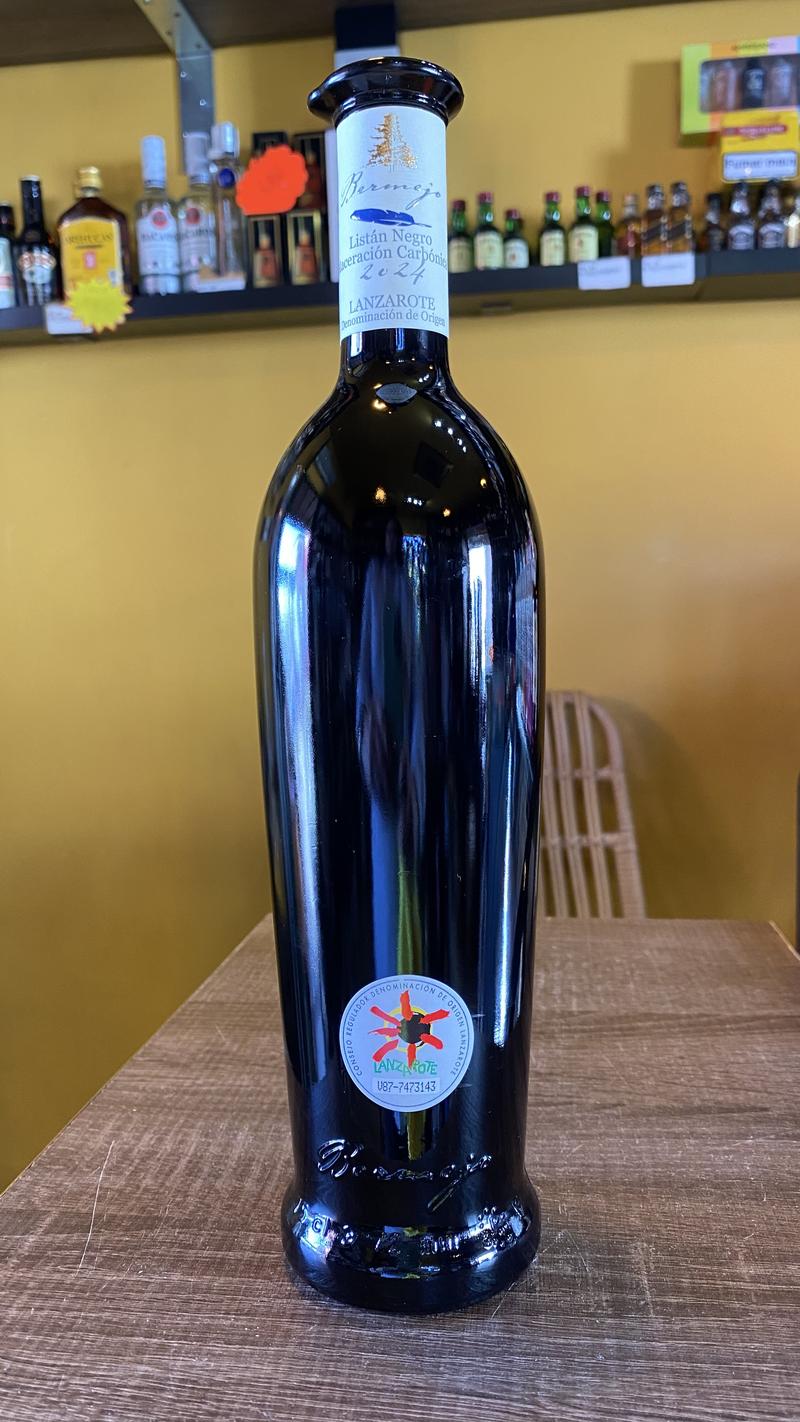
You'll find other varieties too, including Listán Negro for reds and rosés and Moscatel for sweeter styles. The reds tend to be lighter and fruitier than the heavy reds people expect from a hot climate.
When customers ask which bottle shows off the island best, we usually start with a dry white and see where they go from there. Tell us what you normally drink and we'll point you at something close. Florin will usually push you towards something more adventurous, and he's often right.
What Lanzarote Terroir Tastes Like
Terroir is one of those words that gets overused, but here it genuinely applies. The soil, wind, low rainfall and strong sunshine are so unlike anywhere else that the wines can't really be copied.
In the glass, people usually pick up:
- A crisp, clean acidity, even though the island is hot.
- A faint salty or mineral note, especially in the dry whites.
- Fruit that tastes concentrated rather than heavy, thanks to the small yields.
None of this is strict science. Taste is personal and bottles vary. But if you drink a Lanzarote white next to a generic supermarket white, you'll notice the difference without anyone explaining it.
Tasting Lanzarote Wine in Playa Blanca
You don't have to drive to La Geria to try the wines. We pour them on our terrace at Marina Rubicon, and it's often the easiest way to compare styles side by side.
Our Yaiza Board is the one we recommend for first-timers. It comes with four Yaiza wines: Rosado, Seco, Semi-Dulce and Afrutado. Going from dry to sweeter on one board makes it obvious which style you like. If you prefer reds, the Red Board has Yaiza Tinto, Volcano, Ribera and Rioja, which puts the island's red next to two mainland classics.
There's also a wine tasting at €14 for four glasses. By the glass we pour Yaiza, Volcano, Vinosol, Cava, Prosecco, Ribera and Rioja, so you can stay with one you like rather than commit to a whole bottle.
Taking Bottles Home
Yaiza blue bottles are €21.50 and Yaiza Tinto is €25. That's a sensible price for a gift, and the bottles pack easily into a suitcase wrapped in clothes. We'd suggest buying one dry white and one more adventurous bottle, such as the Semi-Dulce, so you have something to compare back home.
What to Eat With Volcanic Wine
Dry Lanzarote whites go well with the food you'll already be eating on the island: grilled fish, fried squid, papas arrugadas with mojo and goat's cheese. The acidity cuts through oil and salt very well.
Semi-dulce styles suit spicy dishes or a cheese plate, and lighter reds are fine slightly cool, which is useful when it's 28 degrees outside. Serve whites well chilled, but not so cold that you can't taste anything.
Find Us at Marina Rubicon
We're at Calle El Burrugo 44B, Marina Rubicon, Playa Blanca, open Monday to Saturday from 10am to 3pm and 6pm to 10pm. We're closed all day on Sundays, so plan your tasting board around that.
In this article — available at Brunchi.shop


Frequently Asked Questions
What is volcanic wine in Lanzarote?
▼
It's wine made from vines grown in black volcanic ash, called picón, mainly in the La Geria region. The ash holds night-time moisture, which is how the vines survive with so little rain.
What are zocos in La Geria?
▼
Zocos are the low, curved stone walls built beside each planting pit, or hoyo. They shield the vine from the constant trade wind, and you can see thousands of them driving through La Geria.
What is the main grape in Lanzarote wine?
▼
Malvasía is the island's signature white grape and makes up most of the plantings. You'll also find Listán Negro for reds and Moscatel for sweeter wines.
Where can I taste Lanzarote wine in Playa Blanca?
▼
You can taste on our terrace at Brunchi.shop in Marina Rubicon. The Yaiza Board has four wines (Rosado, Seco, Semi-Dulce, Afrutado), and our wine tasting is €14 for four glasses.
How much does a bottle of Lanzarote wine cost?
▼
At Brunchi.shop, Yaiza blue bottles are €21.50 and Yaiza Tinto is €25. Small yields from the ash-pit vineyards are a big part of why island wine costs more than a supermarket bottle.